
 Solicitar Orçamento
MapBiomas research identifies improvements in pasture conditions and reinforces the importance of proper management for agribusiness productivity.
Brazil’s livestock industry has made significant progress in pasture conditions over the past decades. A survey released by MapBiomas, based on satellite imagery, found that the area of high-vigor pastureland in Brazil increased from 40.2 million hectares in 2000 to 59.1 million hectares in 2025. This represents a 47% increase over 25 years.
During the same period, areas classified as low-vigor pastureland decreased by 31%, falling from 50.1 million to 34.6 million hectares. The results are part of MapBiomas Collection 11, which brings together data on land cover and land use in Brazil from 1985 to 2025.
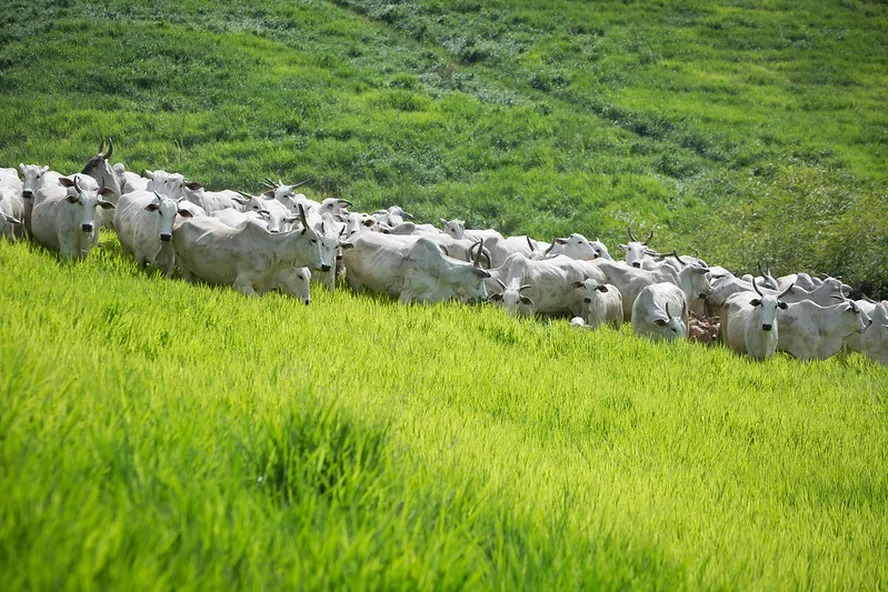
Pasture Management and Recovery Drive Improvements
Pasture vigor classification considers indicators such as the amount of green vegetation and the presence of exposed soil. These factors help assess land conditions and how pastures respond to management practices and forage species characteristics.
According to MapBiomas researchers, the improvements observed may be associated with the establishment of new pastures using appropriate management practices, as well as the recovery of existing grazing areas.
Between 2000 and 2025, among areas that remained classified as pasture throughout the period, 28.4 million hectares showed improvements in vigor, while 14.4 million hectares experienced a decline.
The Cerrado recorded one of the most significant results, with 11.6 million hectares of pastureland improving in vigor, compared with 2.9 million hectares showing a decline. In the Atlantic Forest biome, 7.5 million hectares improved, while 3.6 million hectares experienced reduced vigor.
The Amazon was the exception among the biomes analyzed: 5.7 million hectares lost vigor, while 4.6 million hectares showed improvement.
Biomass Production Also Shows Growth
Another important indicator in the survey is biomass production, which represents the amount of plant material generated by pastureland.
In 2025, approximately 59.4 million hectares of pastureland produced more than 16.4 metric tons of biomass per hectare annually. This area was 39.5% larger than the figure recorded in 2000.
It is important to note that pasture vigor and biomass production are different indicators. While vigor evaluates the relative condition of vegetation against the productivity reference levels of each biome, biomass represents the amount of plant material produced.
These figures help explain how pasture conditions are changing and how proper management can contribute to livestock production performance.
Changes in the Field Affect the Entire Meat Production Chain
The development of livestock farming goes beyond production on rural properties. Improvements in management, forage availability and operational organization are also part of a broader production chain involving transportation, slaughter, processing and food distribution.
At every stage, productivity, standardization and raw material utilization are important factors for the industry’s competitiveness.
In the meat-processing industry, technology contributes to optimizing operations, standardizing products and improving the use of available resources.
Equipment for grinding, dicing and shredding, for example, meets different industrial requirements and supports processes that demand precision, performance and consistency.
Technology and Productivity Go Hand in Hand
The survey results show that agribusiness development depends on a combination of factors, including proper management, planning and investment in technology.
From the farm to the processing facility, every improvement in production processes helps strengthen the food supply chain and prepares the industry to meet the demands of an increasingly competitive market.
Precisão Inox follows this evolution by developing food-processing solutions and equipment focused on productivity, standardization and industrial efficiency.
Precisão Inox — Built to Last.
Source and credit: This article was originally written by Precisão Inox based on the report “Área com pastagens de alto vigor cresceu 47% no Brasil em 25 anos,” published by Globo Rural in November 2026. The data comes from MapBiomas Collection 11.
Original report: https://globorural.globo.com/pecuaria/noticia/2026/11/area-com-pastagens-de-alto-vigor-cresceu-47percent-no-brasil-em-25-anos.ghtml