
 Solicitar Orçamento
 Brazilian beef exports faced a significant slowdown in September 2026. According to data from the Brazilian Association of Meat Exporting Industries (ABIEC), based on information from Brazil’s Ministry of Development, Industry, Foreign Trade and Services (MDIC), Brazil exported 229,300 tonnes of beef during the month, down 35.1% compared with September 2025.
Export revenue also declined, reaching approximately US$1.38 billion, a 27.6% decrease year over year.
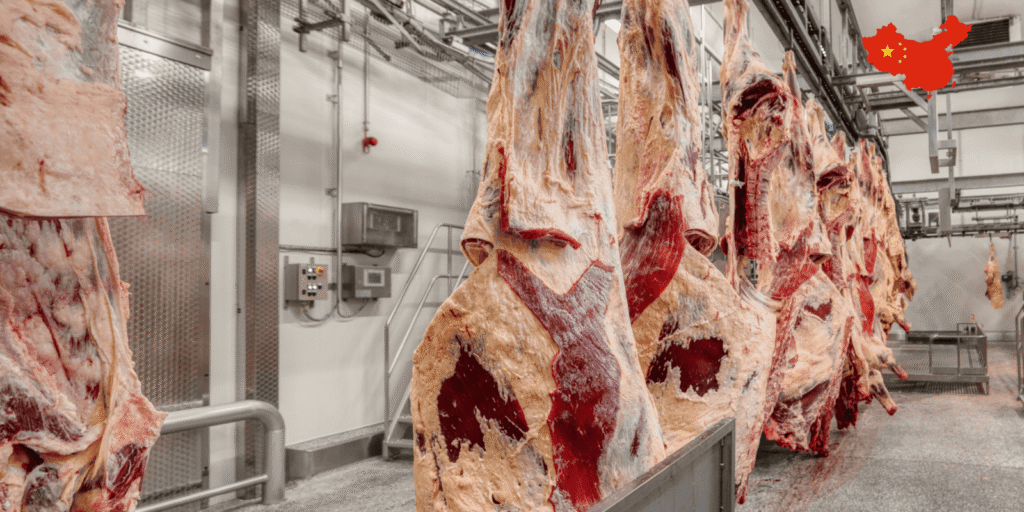
One of the main factors behind this performance was the sharp reduction in shipments to China, historically the largest destination for Brazilian beef. In September, exports to the Chinese market totaled 12,900 tonnes, representing a decline of more than 90% compared with the same month of the previous year.
Market diversification becomes increasingly important
Despite the overall decline, several international markets increased their purchases of Brazilian beef.
Indonesia, Saudi Arabia, Turkey and Canada were among the destinations that recorded significant growth in September. This movement highlights an important strategic opportunity for the Brazilian beef industry: expanding its international customer base and reducing dependence on individual markets.
From January through September, Brazil exported approximately 2.43 million tonnes of beef, a level broadly in line with the same period of 2025. Export revenue, however, reached US$14.17 billion, representing a 14.1% increase.
These figures demonstrate that international demand remains a critical component of Brazil’s animal protein industry, even amid substantial fluctuations in individual markets.
Industrial efficiency becomes a strategic priority
In a more volatile global environment, efficiency is no longer simply a competitive advantage. It is becoming an operational requirement.
For slaughterhouses and meat processors, increasing productivity, reducing losses, improving cut consistency and optimizing raw material utilization are essential to maintaining competitiveness.
This is where processing technology plays an increasingly important role.
Equipment designed for specific production applications can help improve operational consistency, reduce manual steps, standardize products and maximize raw material utilization.
A more efficient processing operation is also better positioned to respond to market fluctuations, meet different customer specifications and pursue new international markets.
The challenge is not simply producing more
Expanding Brazil’s position in the global protein market requires more than increasing production volume.
The industry must deliver consistency, precision, food safety and efficiency.
Processors need to handle different cutting specifications, product formats, weights and customer requirements while maintaining high performance at industrial scale.
In this environment, automation and process engineering become strategic tools.
Technologies for cutting, grinding, dicing and shredding, for example, can transform critical production stages into more predictable, standardized and controllable processes.
A global market requires a prepared industry
The decline in September exports demonstrates how trade policies, import regulations and changes in international demand can rapidly affect the entire animal protein supply chain.
At the same time, the growth recorded in several markets shows that opportunities remain available for Brazilian companies prepared to compete across different commercial environments.
For the industry, this means continuously investing in productivity, technology, quality and operational capacity.
At Precisão Inox, we believe engineering must be connected to the real challenges faced by the food processing industry. That is why we develop equipment focused on productivity, consistency and efficiency in protein processing, always considering the specific requirements of each operation.
In an increasingly competitive global market, producing better can be just as important as producing more.
Source and reference
This article was independently developed by Precisão Inox based on data and information published in the Globo Rural article “Sem China, exportações de carne bovina voltam a cair em setembro”, published on October 7, 2026, using data from ABIEC and MDIC.