
 Solicitar Orçamento
 The Brazilian burger market is experiencing strong growth. Beyond traditional burger restaurants, demand is increasing among supermarkets, food distributors, industrial kitchens, and frozen food manufacturers. To keep pace with this expansion, increasing production without compromising quality has become one of the industry’s biggest challenges.
In this scenario, production automation is no longer a trend—it is a strategic investment. By replacing manual operations with industrial processing equipment, manufacturers can increase production capacity, reduce operating costs, and achieve a far more consistent product quality.
Increase Production Without Expanding Your Facility
Many companies assume that increasing production requires hiring more employees or expanding their manufacturing facilities. In reality, this is not always the most efficient solution.
Most production bottlenecks occur during raw material preparation, meat grinding, mixing, and feeding the production line. Automating these processes improves workflow, minimizes interruptions, and maximizes the utilization of existing resources.
Beyond productivity gains, automation reduces operator fatigue and minimizes errors associated with repetitive manual operations.
Product Consistency Adds Value
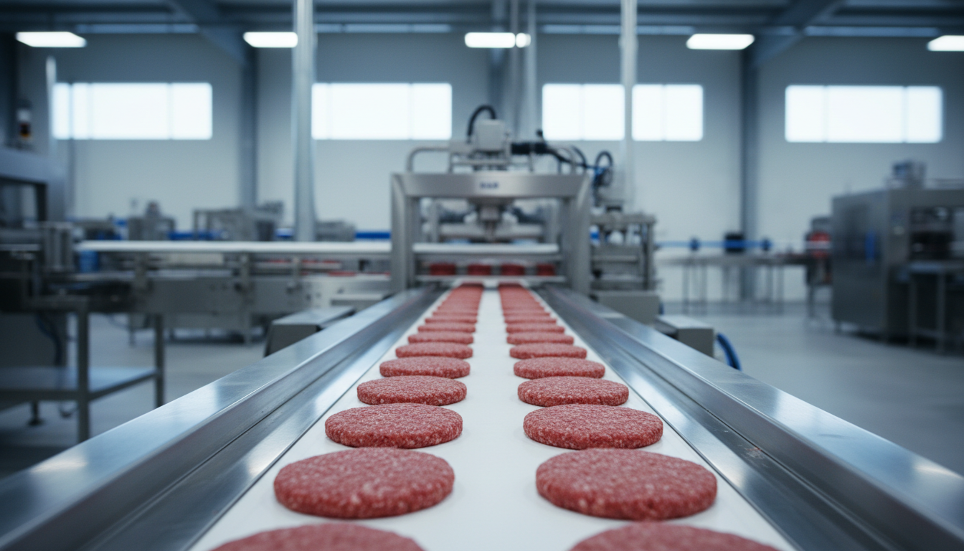
In the food processing industry, maintaining product consistency is just as important as achieving high production volumes. Variations in grinding, texture, or mixing can negatively impact product quality and lead to costly rework.
Industrial processing equipment provides greater control over every stage of production, ensuring consistent product characteristics from batch to batch. This simplifies quality control, reduces waste, and strengthens brand credibility with customers and distributors.
Reduce Waste and Increase Profitability
Another major advantage of automation is improved raw material utilization. Equipment specifically engineered for protein processing minimizes product losses during grinding, conveying, and meat handling, directly reducing production costs.
In today’s highly competitive market, even small reductions in waste can generate significant annual savings.
Technology Designed for Protein Processing
Although management software is essential for controlling inventory, sales, and financial performance, operational efficiency ultimately depends on the production line itself.
This is where industrial processing equipment delivers measurable value. Automated solutions increase production capacity, reduce downtime, and improve overall process reliability.
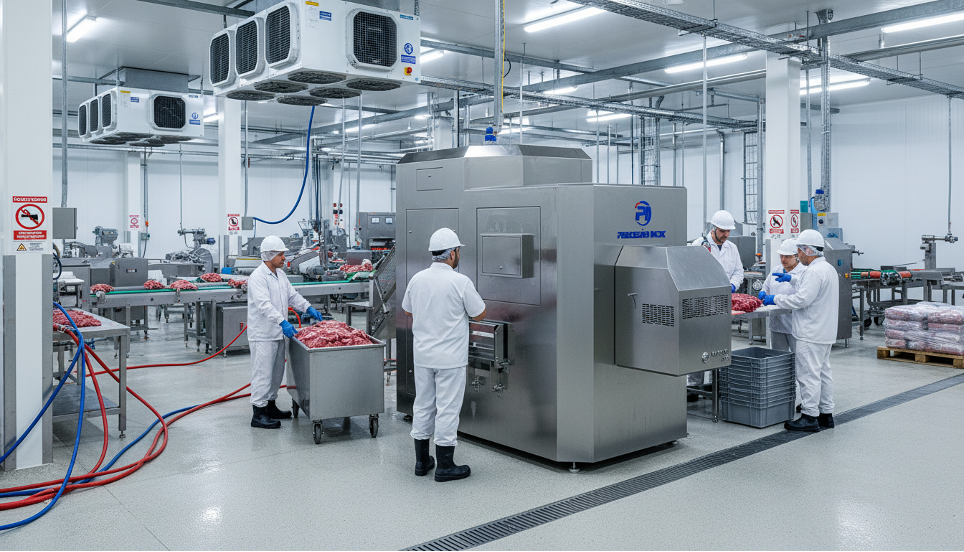
Precisão Inox specializes in manufacturing AISI 304 stainless steel equipment for the protein processing industry. Its product portfolio includes industrial grinders, mixers, frozen block breakers, dicers, shredders, and other processing solutions that help companies of all sizes modernize their production operations.
Every machine is designed to meet the specific requirements of each production process, delivering greater efficiency, operational safety, and optimized raw material utilization.
Is It Time to Automate Your Production?
Several indicators suggest that automation may be the right investment:
- Difficulty keeping up with increasing demand;
- Excessive labor allocated to repetitive operations;
- Frequent raw material losses;
- Inconsistent product quality;
- Recurring production downtime.
When these challenges begin affecting operating costs and productivity, investing in industrial processing equipment typically delivers a rapid return through improved operational efficiency.
Preparing Your Business for the Future
Competition in the food processing industry demands increasingly efficient manufacturing processes. Companies that invest in automation are better positioned to respond quickly to market changes, increase production capacity, and maintain consistently high quality standards.
More than simply purchasing new equipment, automation means building a production operation prepared for sustainable growth by reducing waste, increasing productivity, and delivering a more competitive final product.