
 Solicitar Orçamento
The use of animal by-products creates new opportunities for value generation, strengthens the circular economy and brings the protein industry closer to the renewable energy market.
Brazil’s meat processing industry is facing new opportunities to make better use of its raw materials and diversify its revenue streams. One of the key developments is beef tallow, a by-product of meat processing that is gaining relevance as a feedstock for biodiesel production.
This connection between the animal protein supply chain and the biofuel industry represents an important step toward more efficient, sustainable and economically competitive industrial processes.
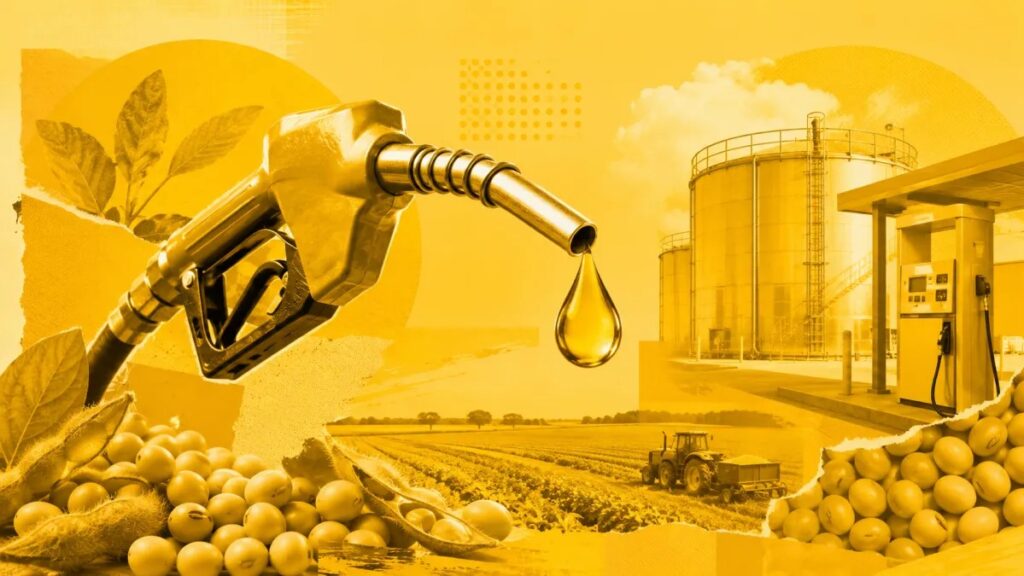
From Meat Processing to Renewable Energy
Traditionally associated with the recovery and use of by-products from meat processing operations, beef tallow is taking on a more strategic role in the biofuel supply chain.
Its use in biodiesel production makes it possible to transform a material generated during industrial processing into an energy feedstock, increasing the added value of meat processing operations.
This trend gained further momentum with the entry of Biopower, JBS’s business unit dedicated to biodiesel production, into the Brazilian Association of Biofuel Producers (APROBIO).
This development reinforces the integration of different agribusiness segments and demonstrates how the animal protein industry can play an increasingly important role in the energy transition.
Circular Economy and Operational Efficiency
One of the main benefits of this integration is the opportunity to make better use of resources generated throughout the production chain.
By directing beef tallow toward biodiesel production, meat processors expand the range of applications for their by-products and contribute to an industrial model based on the principles of the circular economy.
Beyond environmental benefits, this strategy can also create significant economic opportunities.
One example is the potential use of biodiesel in companies’ own transportation fleets, connecting raw material production, fuel manufacturing and distribution logistics.
In practice, this integration can help reduce operating costs, improve resource utilization and strengthen the competitiveness of companies across the industry.
The Growth Potential of Biodiesel in Brazil
Brazil has favorable conditions for expanding the use of animal-based feedstocks in biofuel production, particularly given the scale of its livestock industry.
According to information published by CNN Brasil on November 19, 2026, APROBIO ended the year with 13 member companies, compared with seven when its current leadership took office.
The association brings together 21 biodiesel plants across 11 Brazilian states and all five regions of the country, representing approximately 31% of national biodiesel production.
The report also highlights that the industry is operating with nearly 40% idle capacity, indicating that sector expansion requires careful planning, investment and attention to production capacity and distribution logistics.
This scenario reinforces the importance of developing solutions that improve operational efficiency and maximize the use of available resources.
Technology and Innovation as Foundations of the Meat Processing Industry
The evolution of the animal protein supply chain depends not only on access to new markets but also on the modernization of industrial processes.
Suitable equipment, automation, standardization and operational efficiency are essential factors for meat processors seeking to meet changing market demands and expand production capacity.
In this context, industrial technology plays a strategic role in transforming the sector, supporting safer, more productive operations that meet increasingly demanding quality and sustainability standards.
At Precisão Inox, we believe innovation is an essential part of this evolution. We develop machinery and equipment made from AISI 304 stainless steel to meet the needs of the protein processing industry, combining engineering expertise, durability and solutions designed around each operation’s requirements.
The Future of the Protein Industry Lies in Integration
The growing connection between meat processors and biodiesel producers demonstrates that the future of the protein industry extends far beyond meat processing and commercialization.
The intelligent use of raw materials, integration across different production chains and adoption of more efficient technologies are creating opportunities for new business models.
More than an opportunity for the biofuel sector, this movement represents a transformation in how the meat processing industry views its resources, processes and growth potential.
Companies that generate value at every stage of production are better positioned to compete, innovate and build a sustainable future.
Precisão Inox | Technology, engineering and innovation for the protein processing industry.
Reference source: Report by Andressa Simão, published by CNN Brasil on November 19, 2026, titled “Sebo bovino aproxima frigoríficos do mercado de biodiesel no Brasil”. This article was independently developed by Precisão Inox based on the information presented in the report.