
 Solicitar Orçamento
The reorganization of the 6-on-1-off work schedule raises concerns about labor availability, production capacity and operating margins across Brazil’s agribusiness sector.
Brazilian agribusiness is closely monitoring changes related to working hours and their potential impact on production. The reorganization of the 6-on-1-off work schedule, with longer rest periods, presents significant challenges for activities that rely on continuous operations, such as slaughterhouses, food-processing facilities and agricultural businesses.
According to a report published by Globo Rural in November 2026, producers and companies across the sector are concerned about labor availability and potential increases in operating costs. Key issues include the need for additional hiring, shift restructuring and possible adjustments to production volumes.
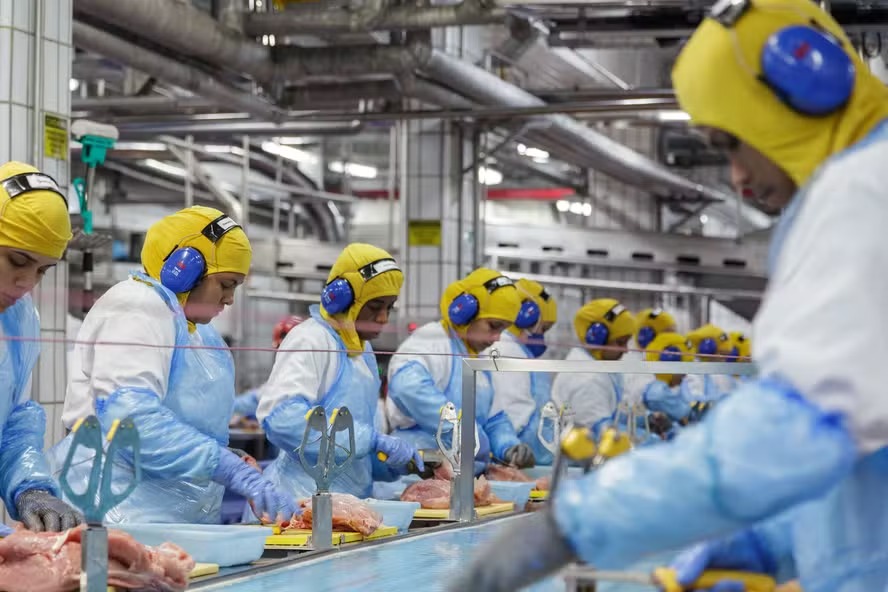
Slaughterhouses Face Challenges in Maintaining Production Levels
The meat-processing industry is among the sectors that could be directly affected by these changes. Slaughterhouses rely on large workforces and well-organized processes to maintain slaughtering, deboning and processing operations.
According to information presented in the report, Frigol estimates that reduced working hours could increase labor costs by approximately 5% in 2027 and 10% in 2028.
To offset the reduction in working hours, the company estimates that it may need to hire 133 additional employees in 2027, at an estimated cost of R$9 million. By 2028, the additional workforce requirement could reach 280 employees compared with 2026, representing R$18 million in extra expenses.
One of the main challenges identified by the sector is finding qualified professionals to meet the demands of industrial operations.
Workforce Availability and Production Capacity
The poultry and pork sectors are also concerned about the restructuring of working schedules. According to figures presented by the Brazilian Animal Protein Association (ABPA), the sector employs approximately 500,000 people and currently has around 20,000 vacant positions.
Hiring difficulties may require adjustments to industrial production capacity, particularly in operations that need to run daily to meet market demand.
In this scenario, companies are considering alternatives such as shift restructuring, collective agreements and working-hour banks, in accordance with the regulations applicable to each activity.
Beyond labor costs, workforce availability can directly influence slaughter volumes, the utilization of industrial facilities and operational profitability.
Technology as an Ally in Industrial Efficiency
In an environment that increasingly demands operational planning, technology plays an important role in the food-processing industry.
Suitable equipment can contribute to process standardization, better raw material utilization and greater efficiency throughout production stages. Grinding, dicing and shredding solutions, for example, are part of operations that require precision, consistency and performance.
Mechanization and process modernization can also help companies organize their teams more effectively and make better use of their installed production capacity.
However, technology does not eliminate every labor requirement. Investment in equipment must be combined with operational planning, professional training and well-organized industrial processes.
Planning Will Be Essential for the Future of the Industry
Changes in working schedules represent a new challenge for agribusiness and the meat-processing industry. The key will be finding a balance between working conditions, workforce availability, operating costs and the need to maintain productivity.
To adapt to this scenario, manufacturers will need to continuously assess their operations and seek solutions that support greater efficiency and competitiveness.
Precisão Inox follows the evolution of the food-processing industry, developing equipment designed to meet the needs of meat-processing operations, with a focus on productivity, standardization and industrial efficiency.
Precisão Inox — Built to Last.
Source and credit: This article was originally written by Precisão Inox based on the report “Nova escala de trabalho pode reduzir produção e margens no campo”, published by Globo Rural on November 9, 2026, with information and interviews originally reported by Valor Econômico.
Original report: https://globorural.globo.com/economia/noticia/2026/11/nova-escala-de-trabalho-pode-reduzir-producao-e-margens-no-campo.ghtml